

Please Note: Shipments to the United States may experience delays because of the new regulations and interruptions due to the inspection at the U.S. customs. We appreciate your understanding and patience
Payment Methods:
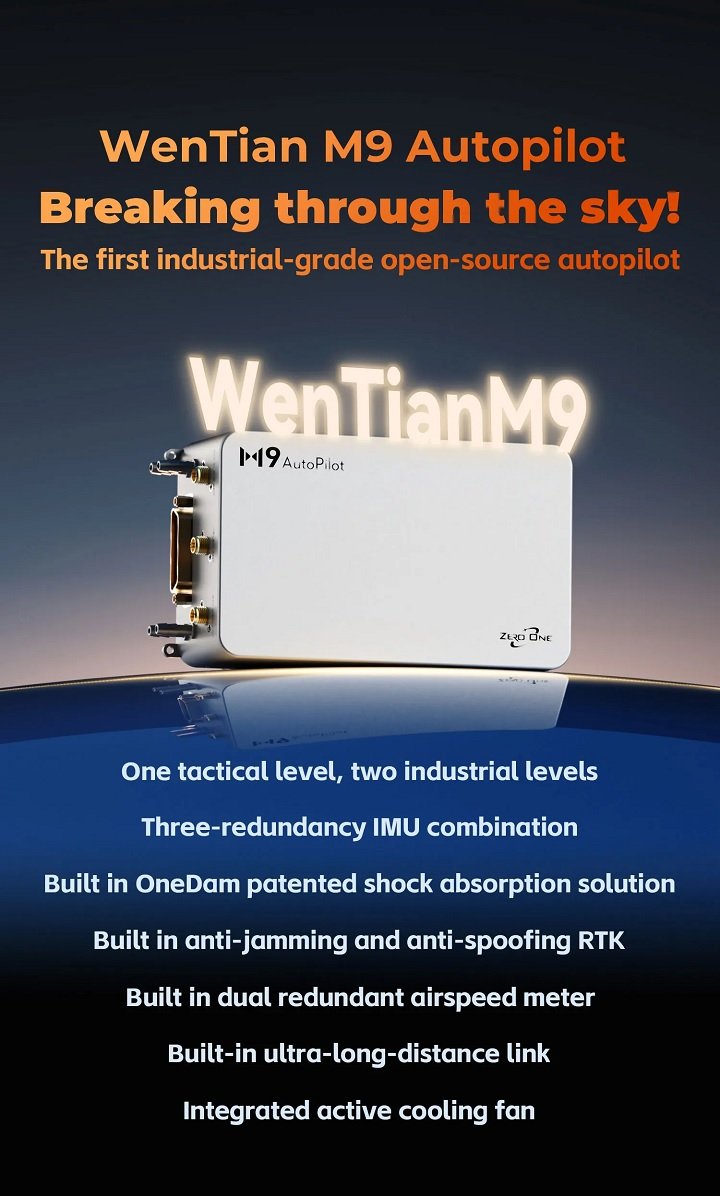
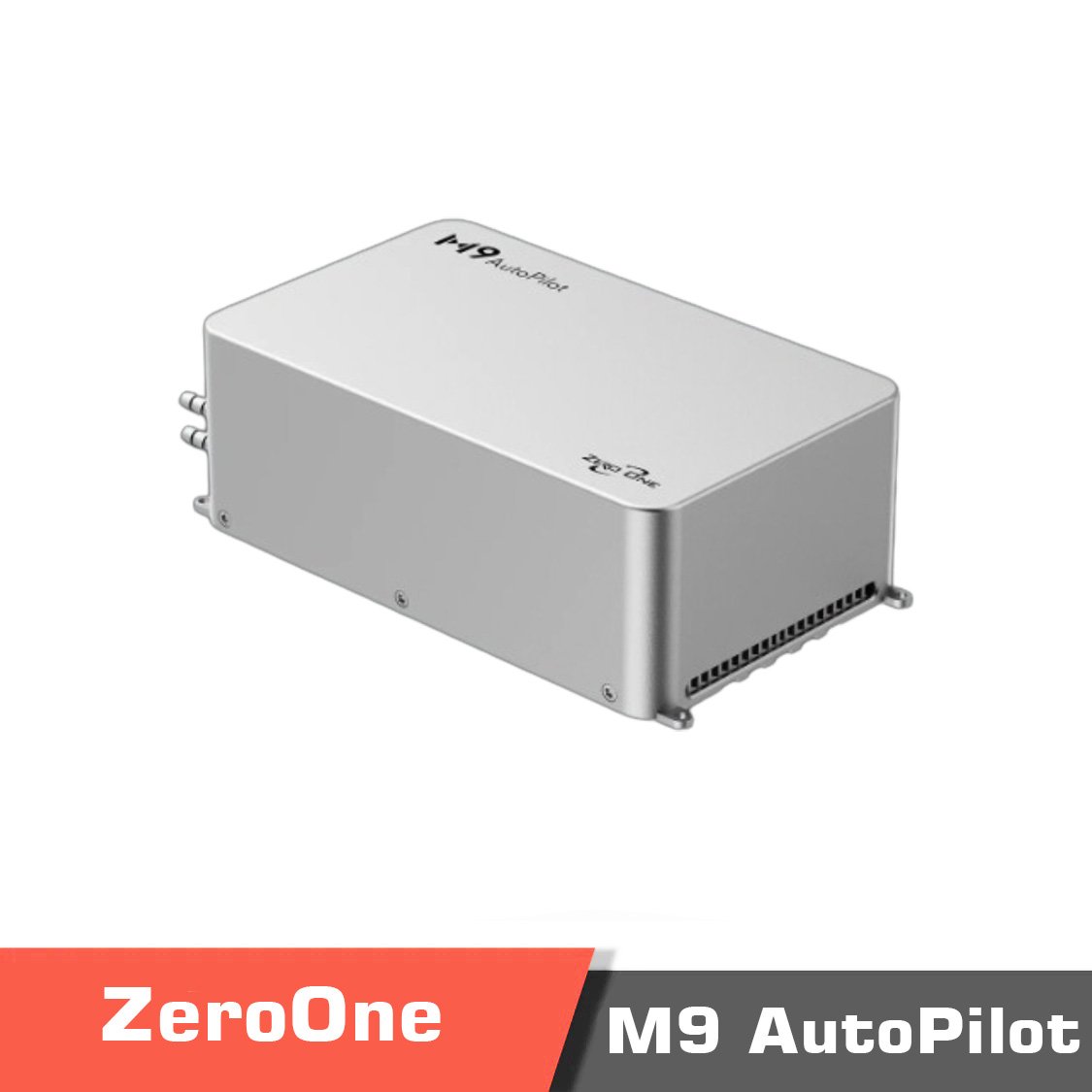
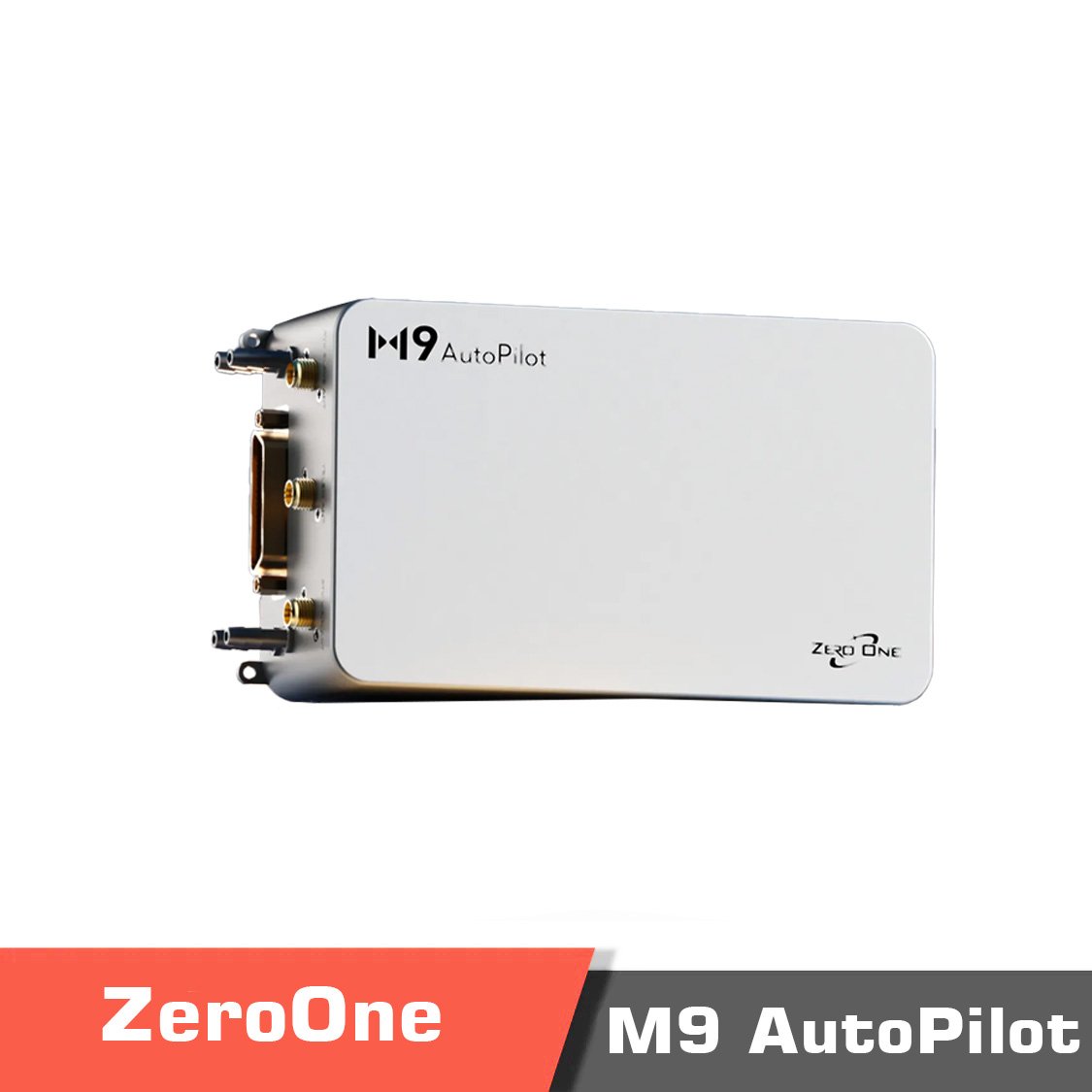
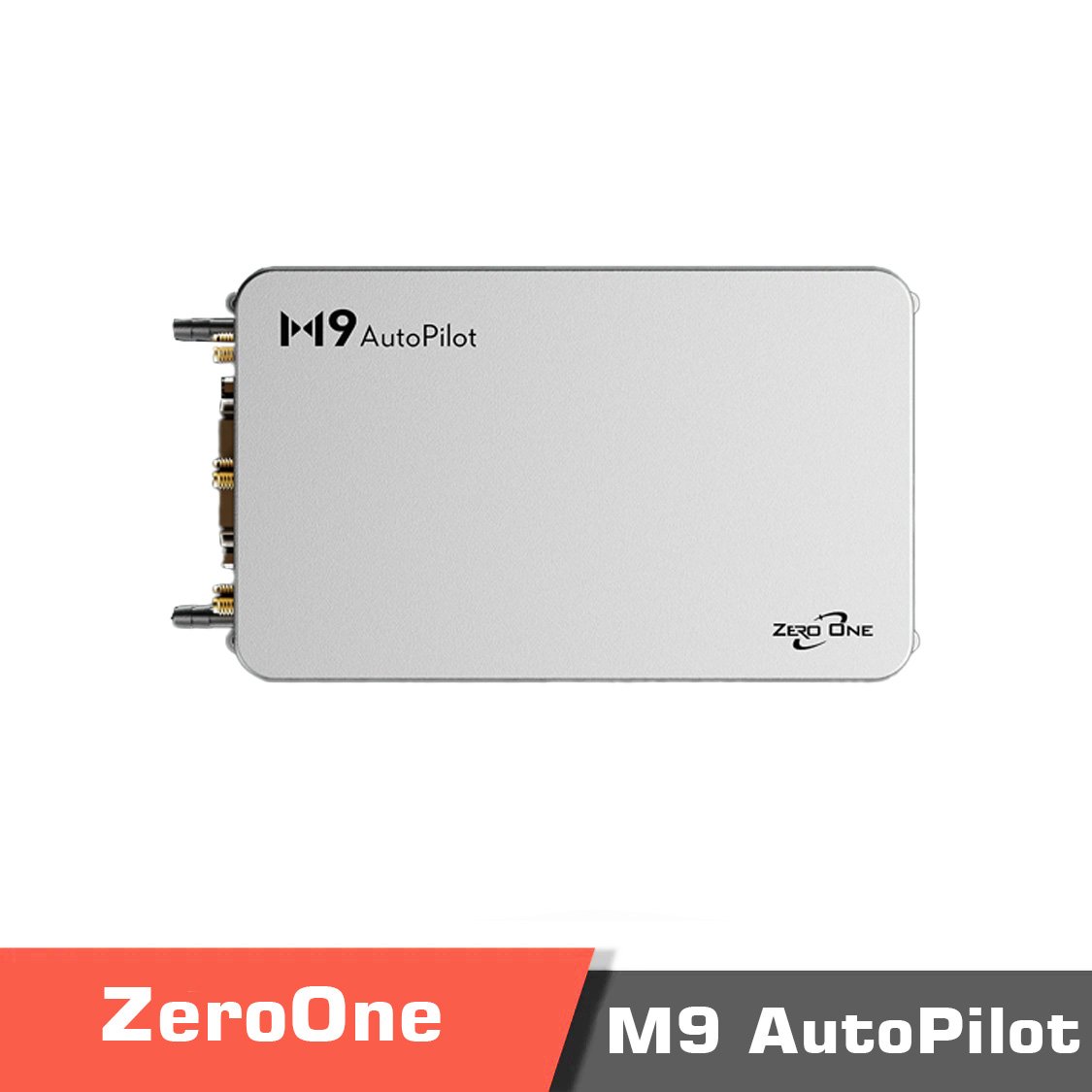
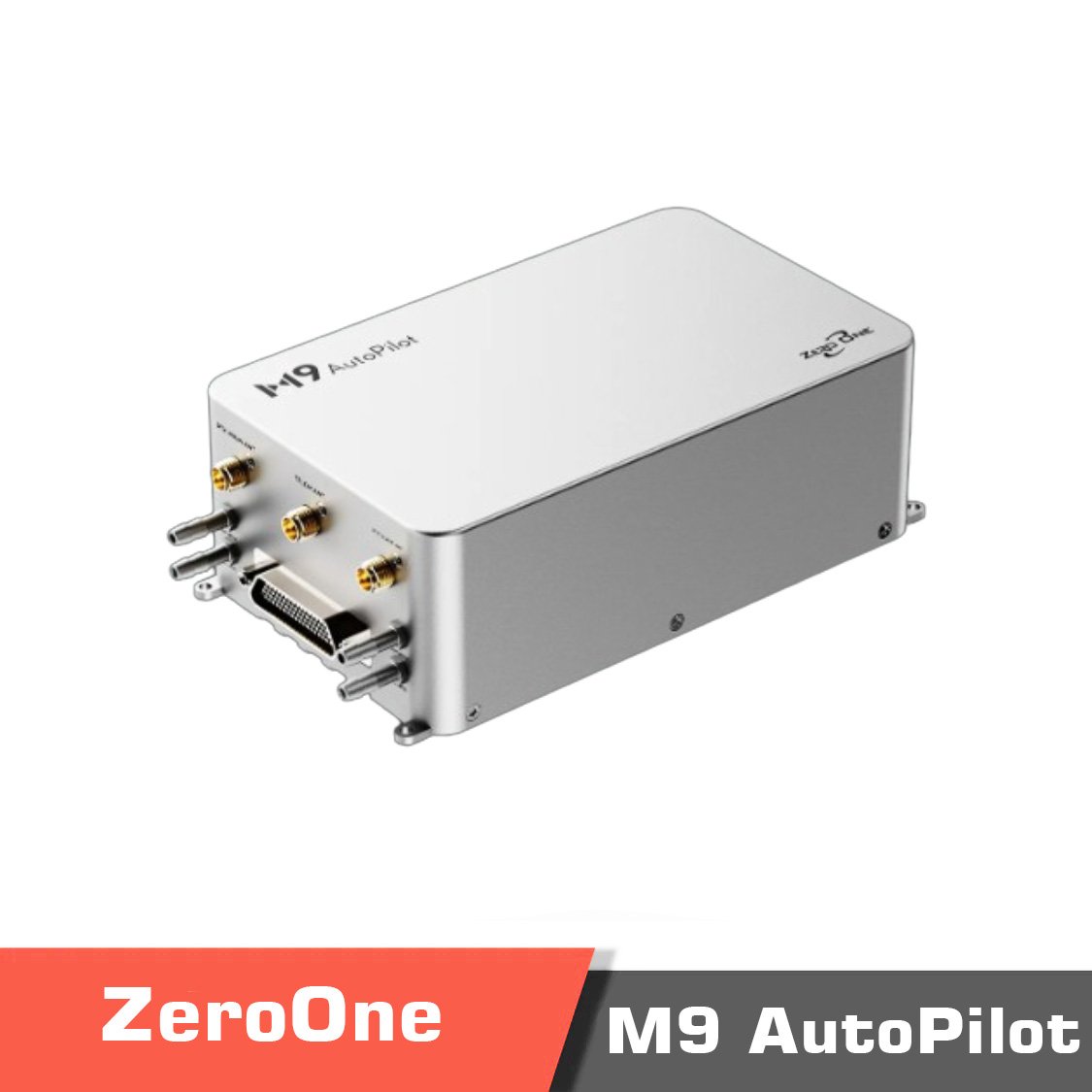
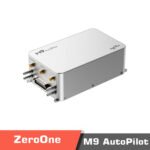
ZeroOne M9 Autopilot, Industrial Grade AutoPilot with SCH16T&ADIS16507 powerful IMU, Integrated anti-jamming Dual Antenna RTK

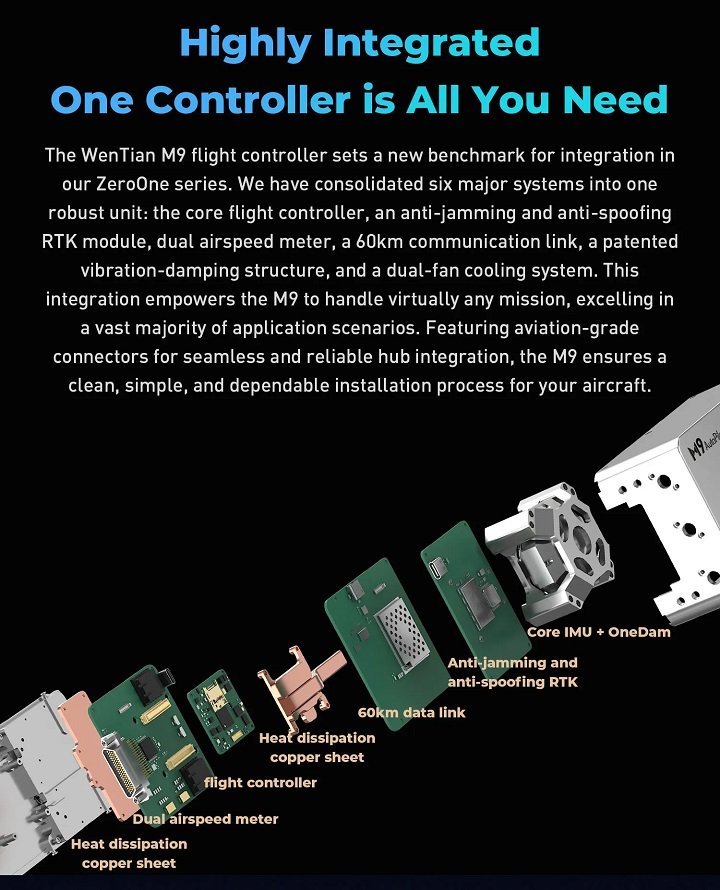
The ZeroOne M9 AutoPilot is a high performance autonomous flight control system designed for professional UAV platforms that demand stability, redundancy, and reliable navigation in complex operating environments. Developed for industrial and commercial drone applications, this autopilot integrates advanced sensing, navigation, and thermal management technologies into a compact and robust architecture suitable for long duration and high speed missions.
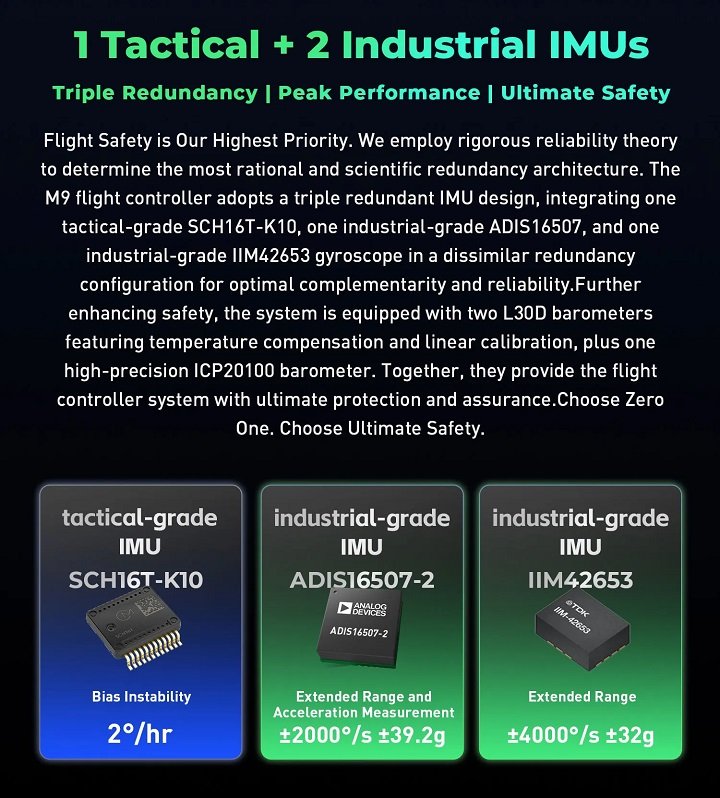
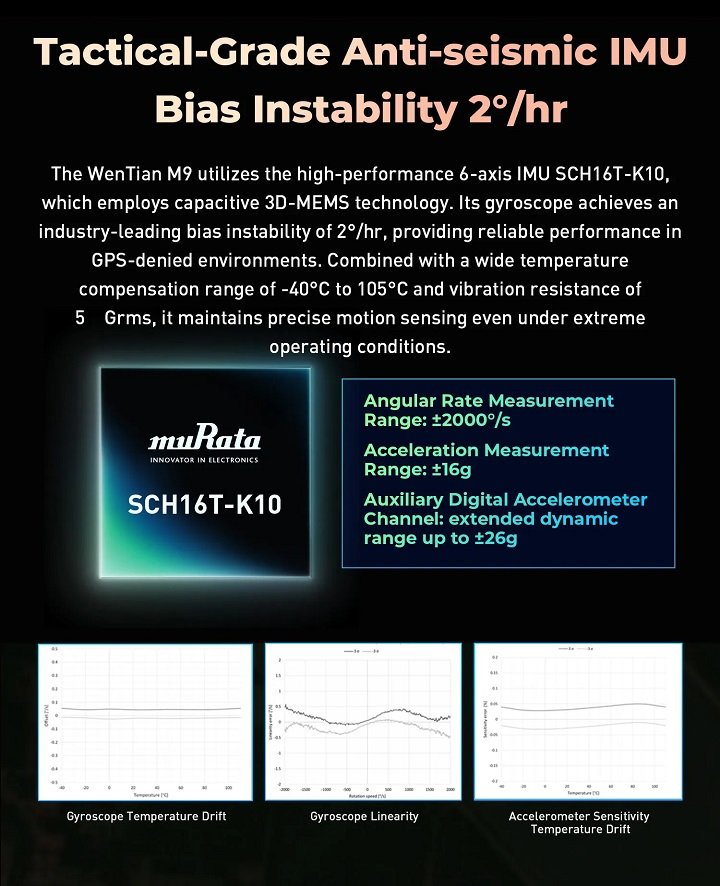
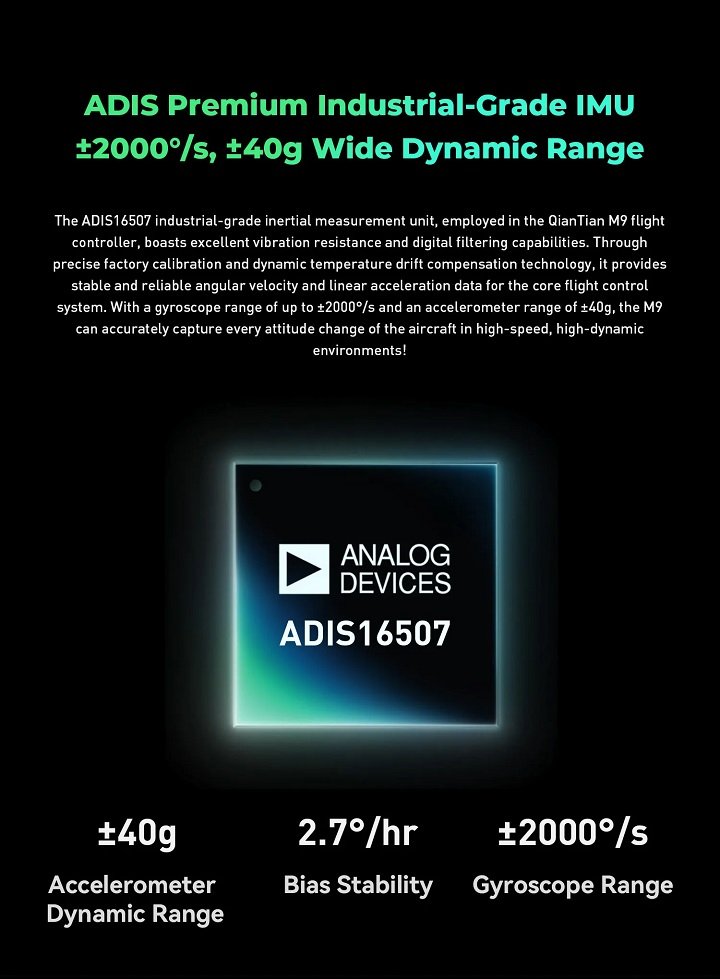
Powered by the SCH16T and ADIS16507 industrial grade IMU combination, the ZeroOne M9 AutoPilot delivers precise attitude estimation and reliable inertial data even under strong vibration and electromagnetic interference. This makes it particularly suitable for fixed wing UAVs, hybrid platforms, and advanced multirotor systems operating in challenging environments.
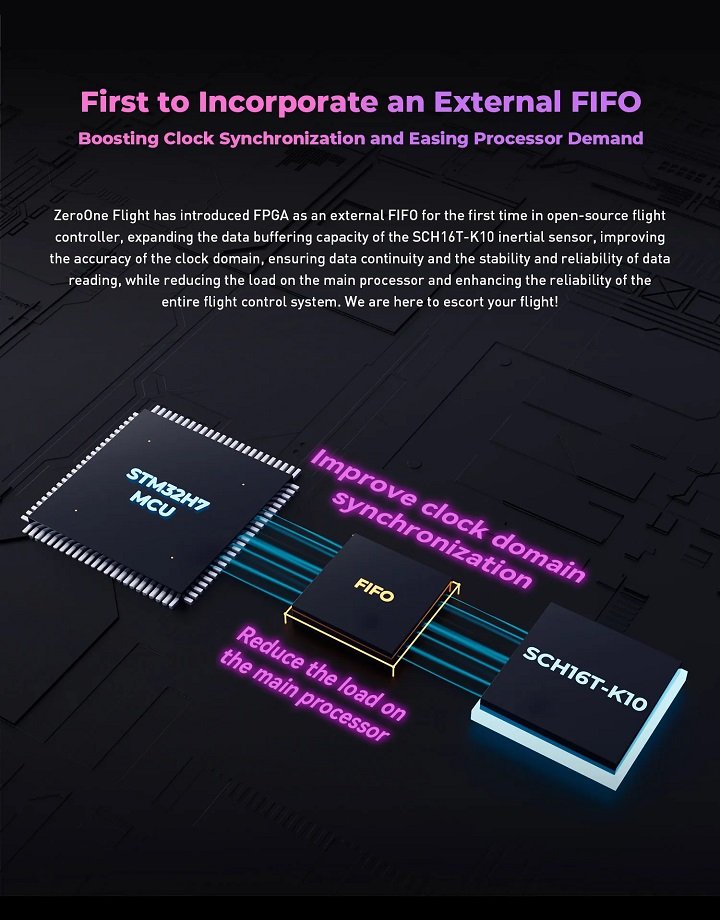
At the core of the ZeroOne M9 AutoPilot is a powerful dual IMU solution combining SCH16T and ADIS16507 sensors. This configuration provides high accuracy gyroscope and accelerometer data with excellent temperature stability and low noise characteristics.
By leveraging redundant inertial sensing, the autopilot maintains stable flight control during aggressive maneuvers, high speed cruising, and rapid environmental changes. For UAV engineers, this translates into improved fault tolerance and consistent control performance across a wide range of mission profiles.
The IMU design is especially valuable for platforms that require precise navigation and attitude control, including long endurance fixed wing drones and hybrid VTOL systems.
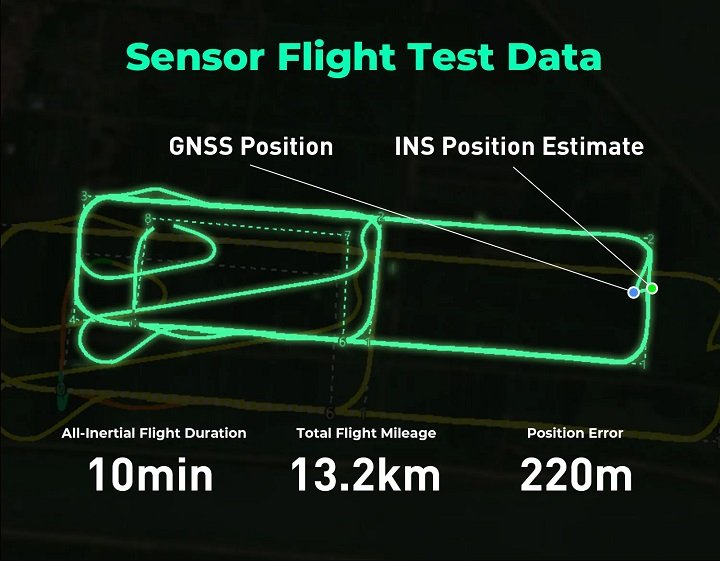
In a flight test of over 10 minutes to show case the capabilities of the internal sensors and INS system, the drone flew over 13.2km and the difference between the position of the drone calculated by the GNSS and INS was only 220m.
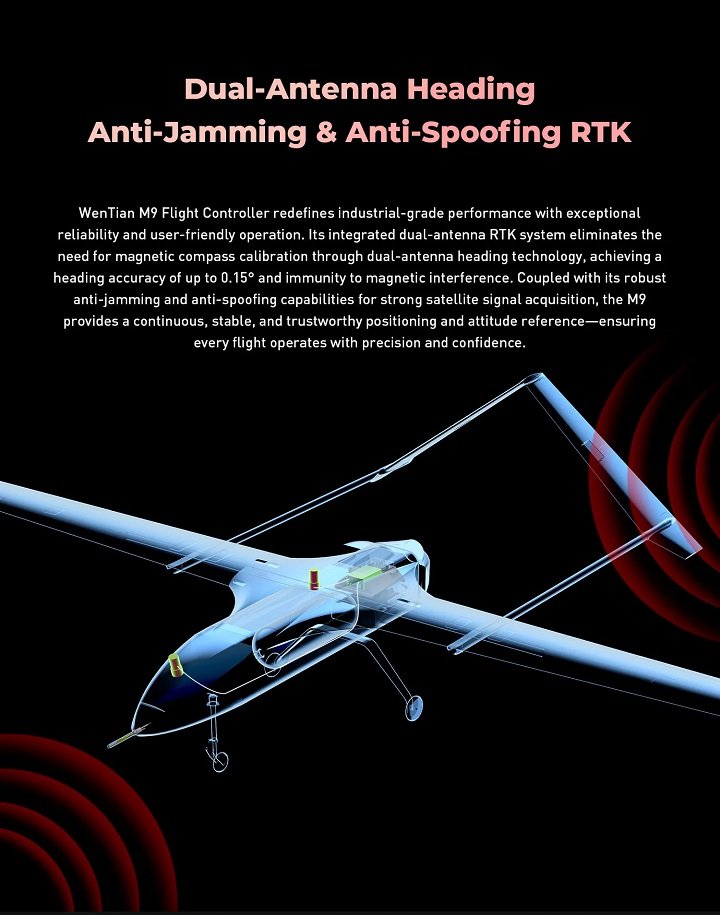
The ZeroOne M9 AutoPilot features an integrated dual antenna RTK GNSS solution designed to deliver centimeter level positioning accuracy. The dual antenna configuration enables precise heading determination without relying solely on magnetometers, improving performance in environments with magnetic interference.
In addition, the built in anti jamming capability enhances GNSS reliability in urban, industrial, and contested electromagnetic environments. This ensures stable navigation data for autonomous missions such as surveying, mapping, inspection, and logistics.
For advanced flight management applications, this level of positioning accuracy plays a critical role within modern Autopilot ecosystems that demand reliable navigation under all conditions. Within the broader Autopilot category, systems like the M9 represent the next generation of integrated flight control and navigation solutions.
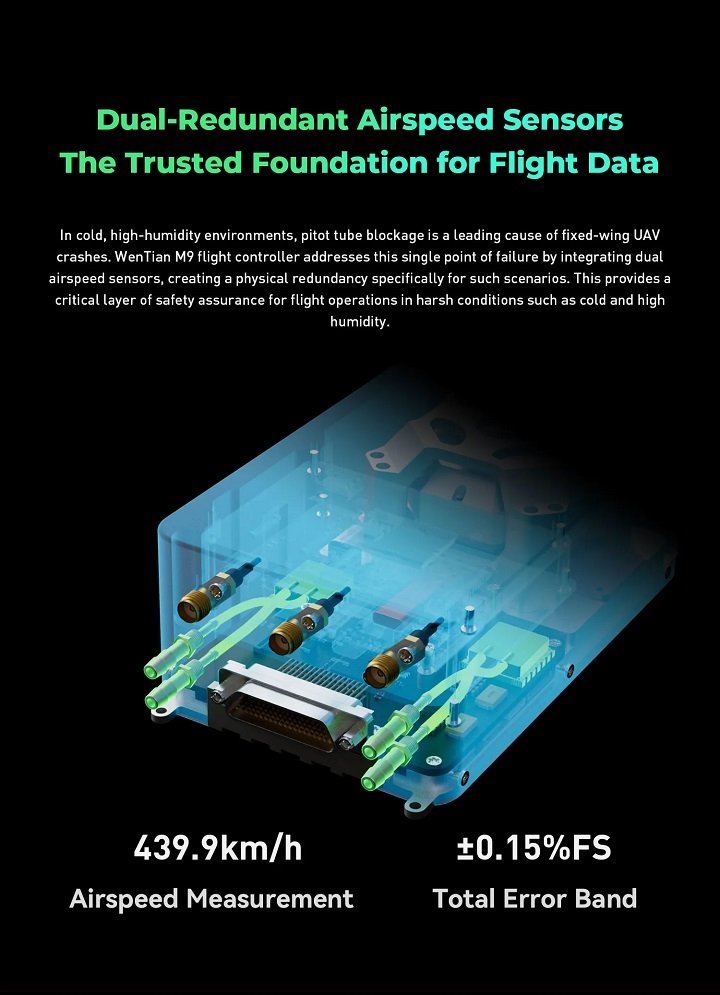
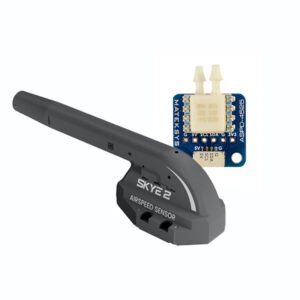
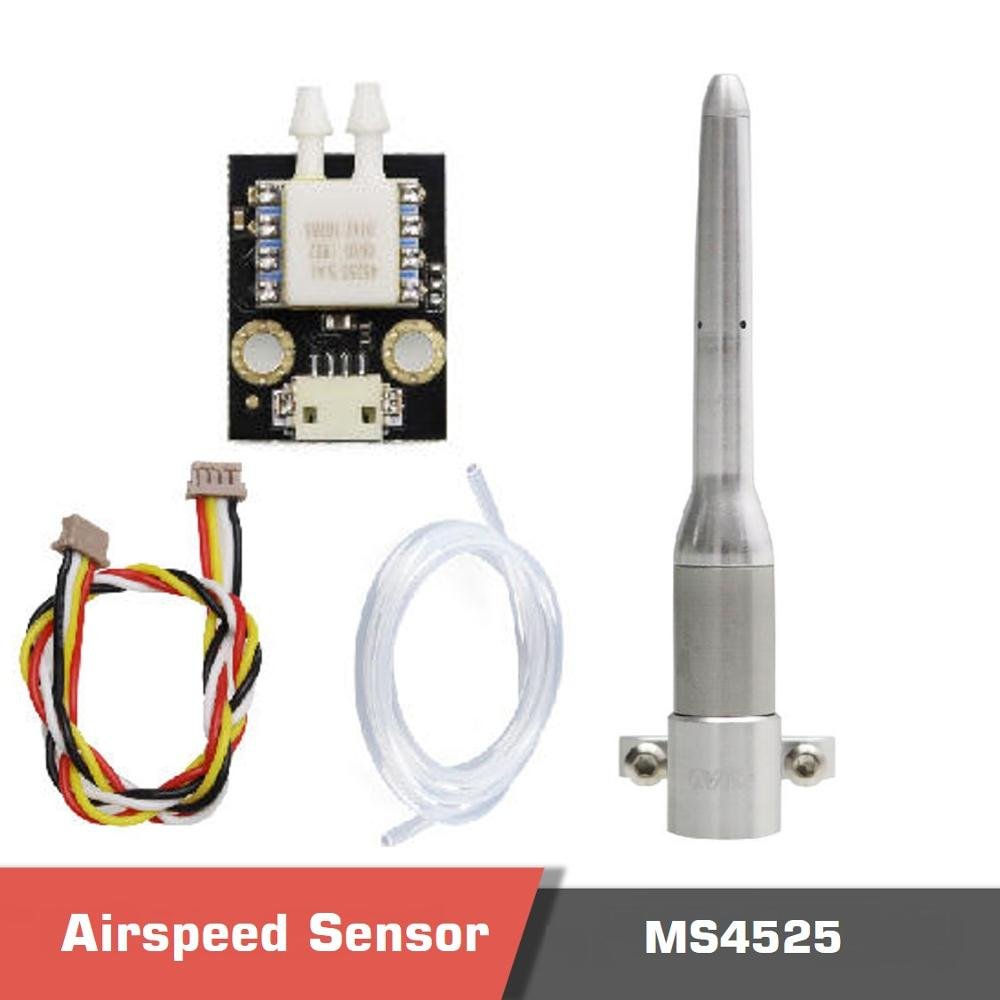
To support high speed UAV operations, the ZeroOne M9 AutoPilot integrates a dual redundancy airspeed measurement system capable of supporting flight speeds up to 439.9 km/h. This design provides reliable airspeed data for fixed wing and hybrid platforms operating across wide speed envelopes.
Dual channel redundancy ensures that airspeed information remains available even if one sensing path experiences degradation. This improves overall flight safety and enhances the accuracy of flight control algorithms, particularly during takeoff, cruise, and landing phases.
For platforms operating in dynamic wind conditions or long range missions, accurate airspeed data directly contributes to improved energy efficiency and flight stability.
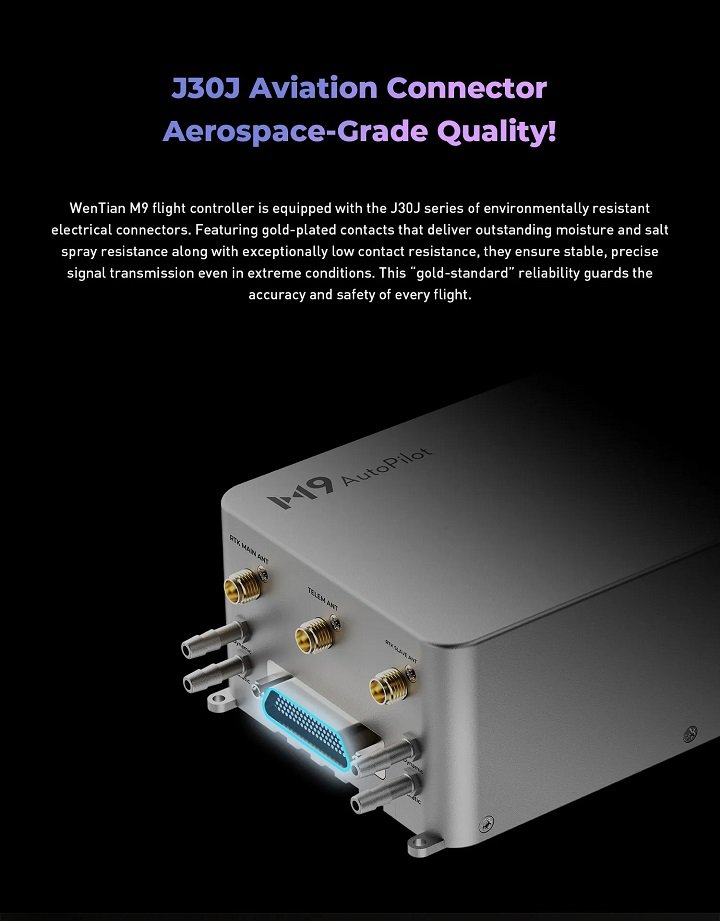
The ZeroOne M9 AutoPilot is equipped with industrial grade J30J aviation connectors designed to ensure secure and reliable electrical connections in demanding operational environments. These connectors reduce the risk of signal interruption caused by vibration, temperature variation, or mechanical stress.
This design choice makes the autopilot well suited for industrial UAVs deployed in agriculture, inspection, surveying, and logistics where reliability and maintainability are critical factors.
From a system integration perspective, MotioNew engineers value this connector design as it simplifies installation and improves long term operational stability across diverse UAV platforms.
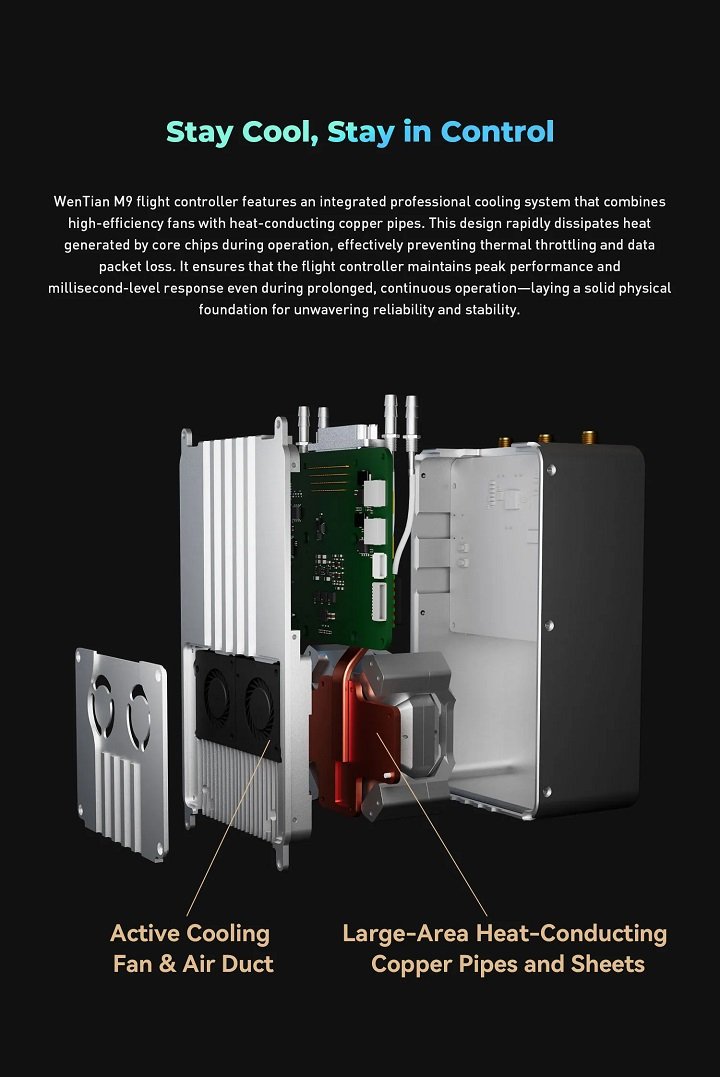
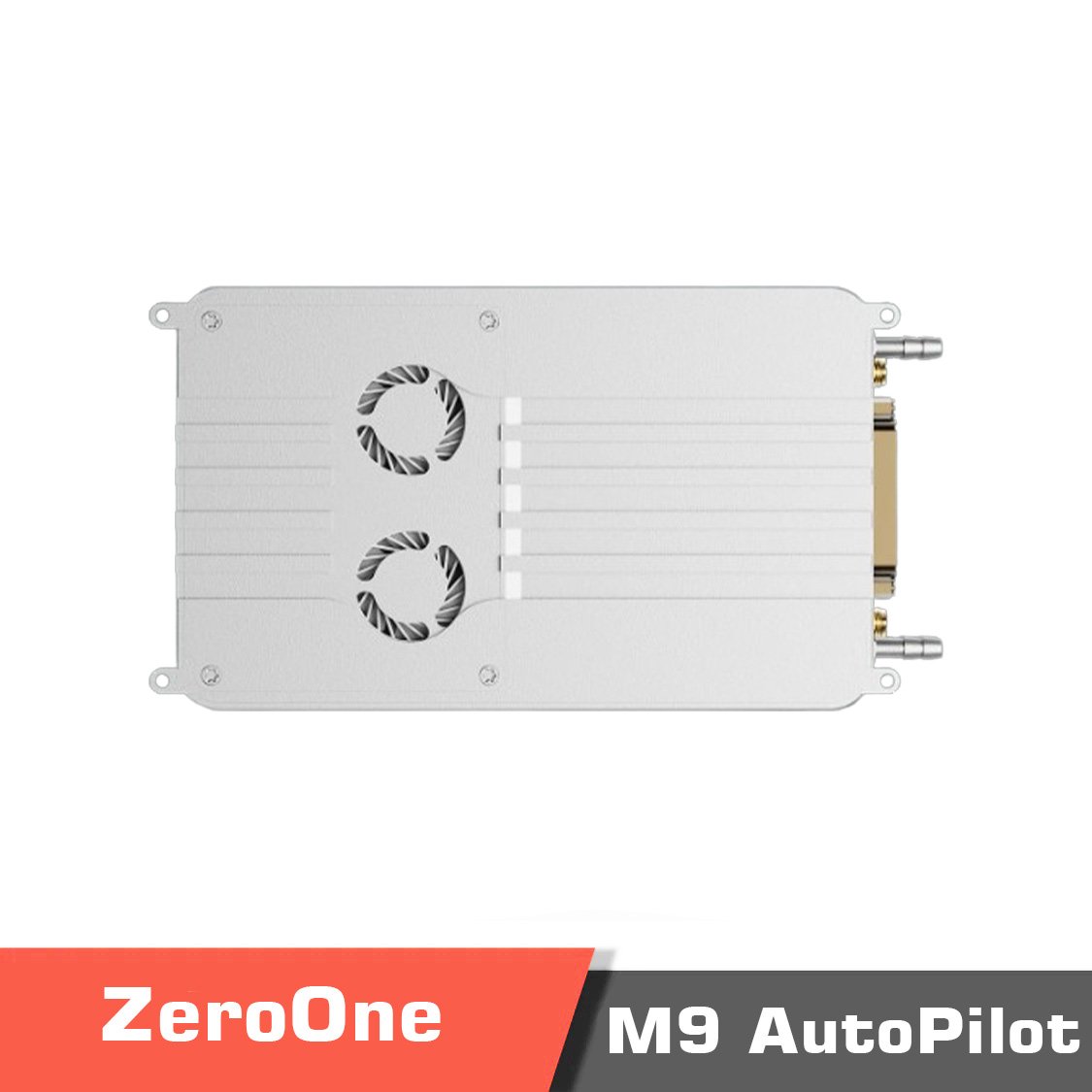
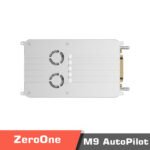
Thermal management is a critical factor for high performance autopilot systems. The ZeroOne M9 AutoPilot integrates a built in dual fan active cooling system that maintains optimal operating temperatures during extended missions. Heat-conducting internal copper pipes also helps with a better heat dissipation.
This active cooling architecture ensures consistent sensor accuracy and processor performance even under high computational loads or elevated ambient temperatures. It also supports reliable operation in enclosed fuselages where passive cooling alone may be insufficient.
For professional UAV operators, this translates into higher mission uptime and reduced risk of thermal related performance degradation.
The ZeroOne M9 AutoPilot is designed to integrate seamlessly with modern UAV ecosystems, including ZeroOne flight management solutions and advanced control architectures. It is suitable for a wide range of platforms, including Multirotor Drone systems, hybrid VTOL aircraft, and fixed wing UAVs requiring precise navigation and robust control logic.
MotioNew provides professional integration support to ensure compatibility with airframes, propulsion systems, and onboard payloads, helping customers accelerate deployment while minimizing integration risks.
MotioNew works closely with UAV engineers, system integrators, and procurement teams to deliver reliable autopilot solutions tailored to real world operational needs. Beyond supplying hardware, MotioNew offers technical consultation, system matching, and integration guidance to ensure optimal performance across different UAV platforms.
For bulk projects and long term programs, MotioNew supports structured procurement, documentation assistance, and scalable delivery to meet industrial and government requirements.
Yes. The integrated dual redundancy airspeed measurement system supports speeds up to 439.9 km/h, making it suitable for high speed fixed wing and hybrid UAV platforms that require accurate airspeed data and stable control.
MotioNew provides professional technical support including integration guidance, compatibility verification, and system architecture recommendations to ensure the autopilot performs optimally within your UAV platform.
Yes. MotioNew supports bulk and wholesale orders for the ZeroOne M9 AutoPilot, with flexible procurement options for B2B buyers, integrators, and long term projects.
MotioNew works directly with procurement teams to offer competitive price structures, stable supply planning, and technical documentation support for large scale and repeat orders.
Buy From MotioNew, and Leave The Technical Worries Behind


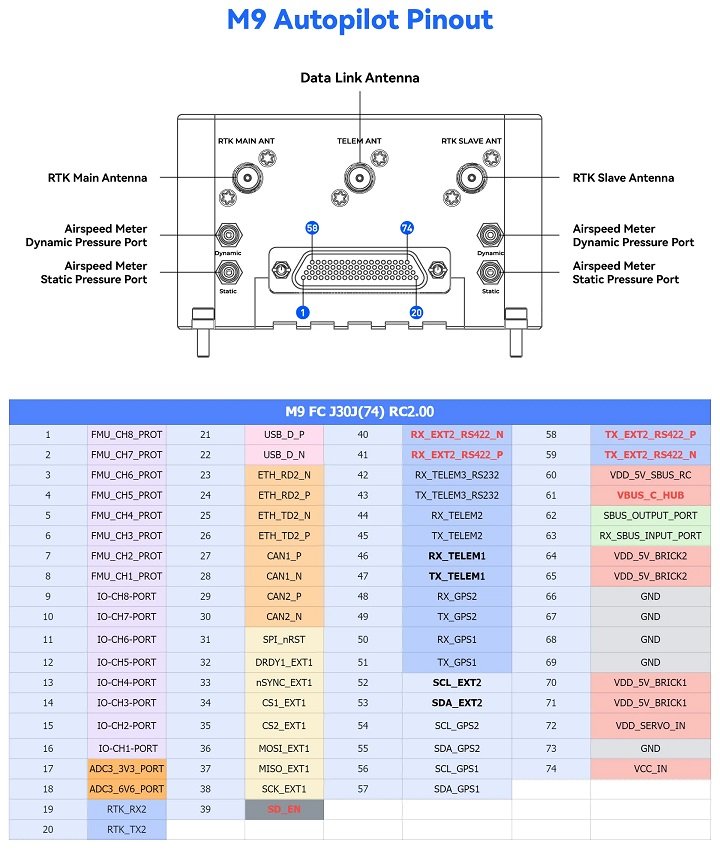
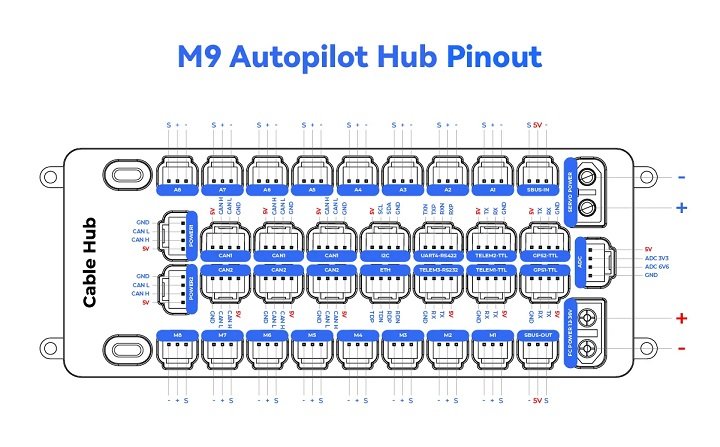
| Category | Parameter | Specification |
|---|---|---|
| Hardware | Hardware Standard | FMU v6X |
| Hardware | Main MCU | STM32H753 |
| Hardware | IO MCU | STM32F103 |
| Hardware | IMU Vibration Damping | Hensghu Damping Architecture |
| Hardware | Accelerometer & Gyroscope | Triple-redundant IMU: ICM45686 (Tactical Grade) + ADIS16470 (Industrial Grade) + IMA2653 (Industrial Grade) |
| Hardware | Barometer | OneASP Pro ×2 + ICP20100 |
| Hardware | Magnetometer (Compass) | RM3100 |
| Hardware | PWM Relay | Yes |
| Hardware | RC Receiver Protocol Input | SBUS, CRSF |
| Hardware | PWM Channels | 16 |
| Hardware | PWM Level Switching | 3.3V / 5V switchable |
| Hardware | Power Interfaces | 2 Bus ports, 6 DroneCAN ports |
| Hardware | Servo Voltage Monitoring | 9.9V |
| Hardware | Operating Temperature | -20°C to 85°C |
| Hardware | Operating Voltage | 4.6V – 5.4V (when not powered via Hub) |
| Hub Interface | CAN1 Ports | ×3 |
| Hub Interface | CAN2 Ports | ×3 |
| Hub Interface | PWM (Servo) | ×16 |
| Hub Interface | Servo Power Port | ×1 |
| Hub Interface | SBUS IN | ×1 |
| Hub Interface | Power IN | ×1 |
| Hub Interface | Power Monitoring | ×2 |
| Hub Interface | Main Power | ×1 |
| Hub Interface | Telemetry TTL | ×2 |
| Hub Interface | Telemetry RS232 | ×1 |
| Hub Interface | GPS1 (TTL) | ×1 |
| Hub Interface | GPS2 (TTL) | ×1 |
| Hub Interface | Ethernet | ×1 |
| Hub Interface | I2C | ×2 |
| Hub Interface | ADC | ×1 |
| Hub Interface | USB Type-C | ×1 |
| Electrical | Flight Controller Input Voltage | 26V ±10V |
| Electrical | Built-in RTK | Yes (via Hub) |
| GNSS | Supported Satellite Systems | GPS, GLONASS, BeiDou, Galileo, QZSS |
| GNSS | Navigation Update Rate | 20 Hz |
| GNSS | Special Features | Anti-interference, Anti-spoofing |
| Positioning | RTK Accuracy (Horizontal) | 0.6 cm + 0.5 ppm |
| Positioning | RTK Accuracy (Vertical) | 1 cm + 1 ppm |
| Positioning | Single Point Accuracy (Horizontal) | 1.2 m |
| Positioning | Single Point Accuracy (Vertical) | 1.9 m |
| Positioning | DGNSS Accuracy (Horizontal) | 0.4 m |
| Positioning | DGNSS Accuracy (Vertical) | 0.7 m |
| Positioning | Velocity Accuracy | 3 cm/s |
| Positioning | Heading Accuracy | 0.15° (1 m baseline) |
| Timing | PPS Output Accuracy | 5 ns |
| Timing | Event Accuracy | < 20 ns |
| Timing | Cold Start | < 45 s |
| Timing | Hot Start | < 20 s |
| Timing | Reacquisition | 1 s |
| Data | Communication Protocol | DroneCAN |
| Data | Output Protocols | SBP, NMEA 0183 (v2.x / v3.x / v4.0) |
| Data | Correction Input | RTCM v3.x (MSM supported) |
| Airspeed Sensor | Configuration | Dual Sets |
| Airspeed Sensor | Measurement Range | 0 – 439.9 km/h (122 m/s) |
| Airspeed Sensor | Maximum Error | ±0.15% |
| Airspeed Sensor | Temperature Compensation | Yes |
| Airspeed Sensor | Linear Calibration | Yes |
| Telemetry | Built-in Telemetry Link | Yes |
| Telemetry | Communication Frequency | 902 – 928 MHz |
| Telemetry | Transmission Protocol | Transparent Transmission |
| Telemetry | Transmission Technology | Frequency Hopping |
| Telemetry | Communication Range | 60 km (Line of Sight, Good EMI Environment) |
| Telemetry | Output Power | 100 mW – 1 W (20–30 dBm, Factory Default: 1 W) |
| Telemetry | Maximum Air Data Rate | Up to 276 kbps |
| Receiver | Sensitivity @ 57.6 kbps | -111 dBm |
| Receiver | Sensitivity @ 115.2 kbps | -110 dBm |
| Receiver | Sensitivity @ 172.8 kbps | -108 dBm |
| Receiver | Sensitivity @ 230.4 kbps | -107 dBm |
| Receiver | Sensitivity @ 276 kbps | -106 dBm |
Please contact us for more information.
Please contact us for more information.
You must be logged in to post a review.
No account yet?
Create an AccountNeed help?















Reviews
Clear filtersThere are no reviews yet.